


Going out to Los Angeles is never for the purpose of eating, but my son is a Fitzmorris, and eating is big in his life. Luckily, his family is on board with eating adventures, though, like the original Tom progeny, buttered noodles are often the order. But if their grandmother is visiting, their sushi places are off the table.
But this trip turned out to be a fascinating cultural dining panoply: I had hambagu from a Japanese Yakitori grill, chunks of fresh fruit from a Mexican Fruiteria, and Foul from a Levantine place. (Pronounced foool, though I’m not sure how much better that sounds than foul.)
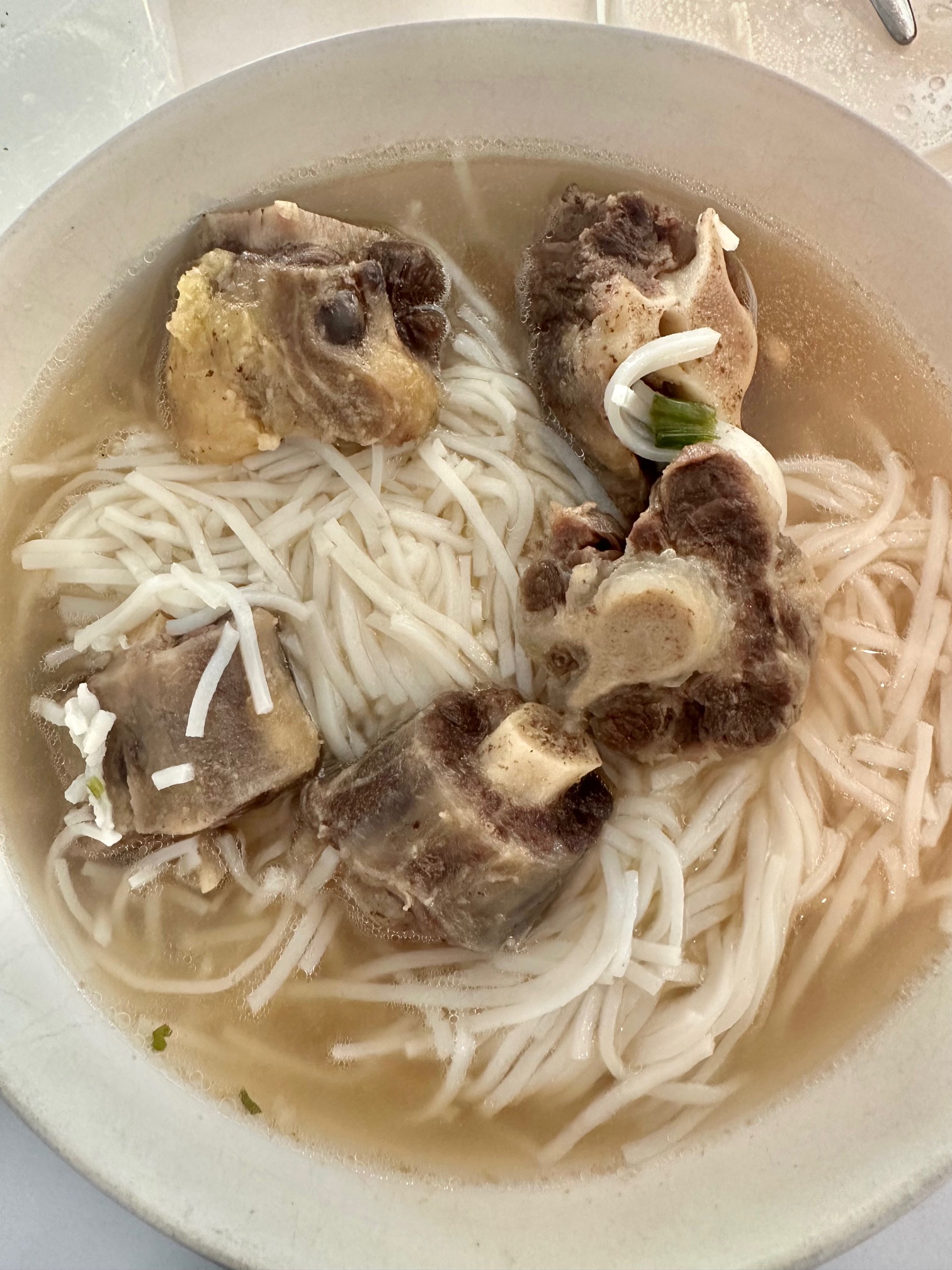
The first meal I had was from a Vietnamese place that was just like a million others everywhere. I had a bowl of oxtail pho, which I ordered because we are so often talking about oxtails on The Food Show. But these were cheap oxtails, not like the ones Tom used to buy for his beef broth. I used to take those out of the broth for him and pick them and eat the meat. That’s when I first discovered how tender the meat was. I began to think that oxtails would become the next short ribs, though that theory hasn’t materialized yet in any meaningful way. The pho was nice, because what could be wrong with a big bowl of broth and noodles?
We went to a place in Studio City that was the only American food I had. It’s called Great White, and I was powerfully impressed with it. Next level everything. I wrote about that on nomenu.com.
The day of the party, a few vendors showed up. The taco guy that I’ve seen before, but this time there was a Fruiteria, known in its native habitat of Mexico as a Frutero. I have seen these all over downtown Los Angeles, but this was the first time I ever engaged with one. It’s a small cart on rollers with glass sides where large chunks of fresh fruit are piled. You select the fruit and place the order, then the attendant slices it on a cutting board and fills a cup with bite-sized chunks of fresh fruit. The usual offerings are watermelon and other melons as well as papayas, pineapples, and mangoes. Despite my general lack of interest in fresh fruit, these carts have been fascinating to me since the day I first saw one years ago.
But it was that evening that the most interesting of the cultural eating adventures arrived. Jude had just returned from a trip to Japan, and as any millennial would be, and Tom Fitzmorris's son in particular would be, he’s all about all the happening food places. He went to a Ramen place which the pics revealed to be worthy of its Michelin stars in the old days before Michelin started giving out participation trophies.
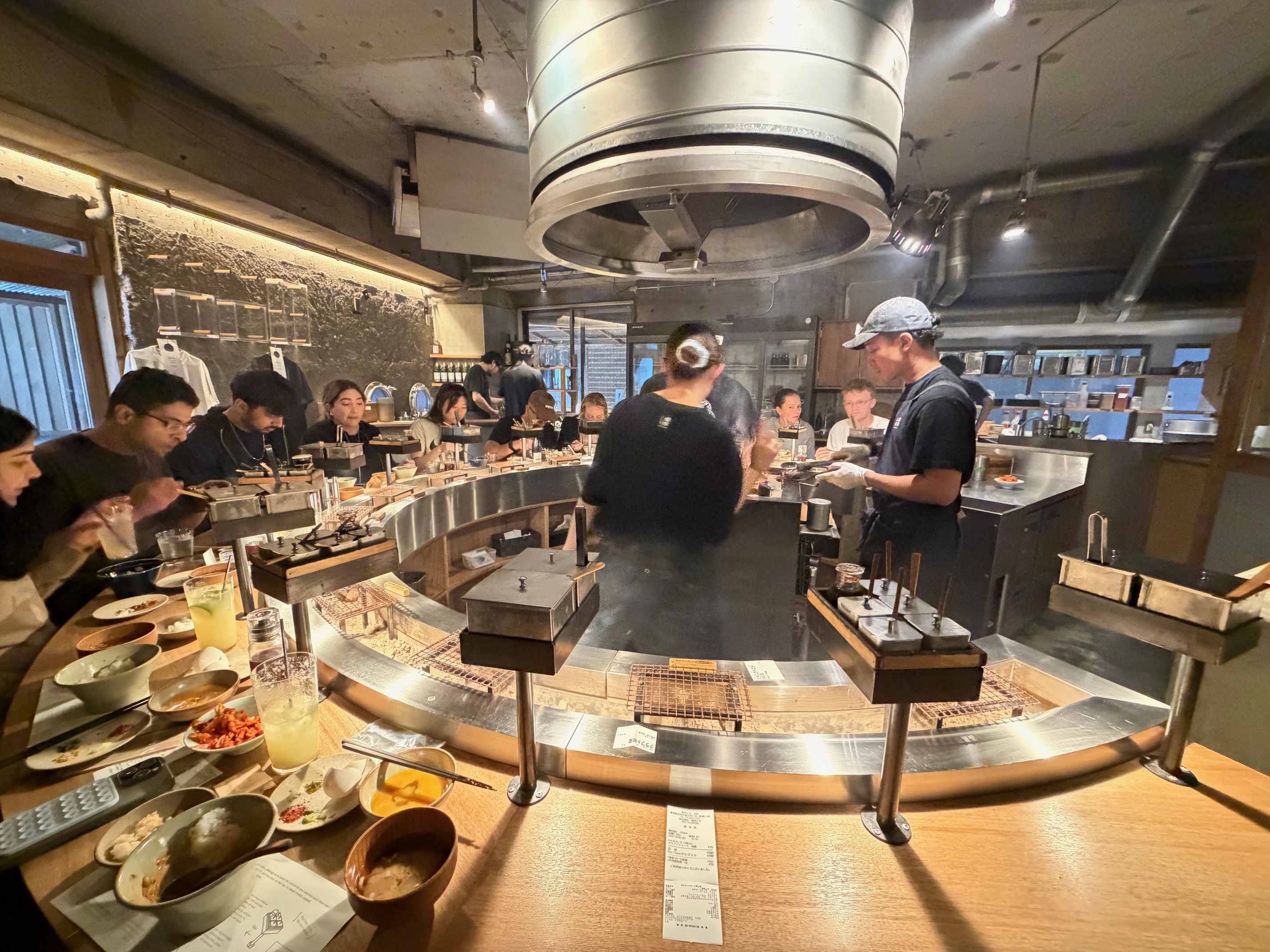
But he also found a local hotspot that would please his mother. Hikiniku serves America’s favorite food, the hamburger, called hambagu there. It is served over white rice. A huge grill is set up in the center of the dining room, with burgers cooked on a grill like a barbecue in the backyard.
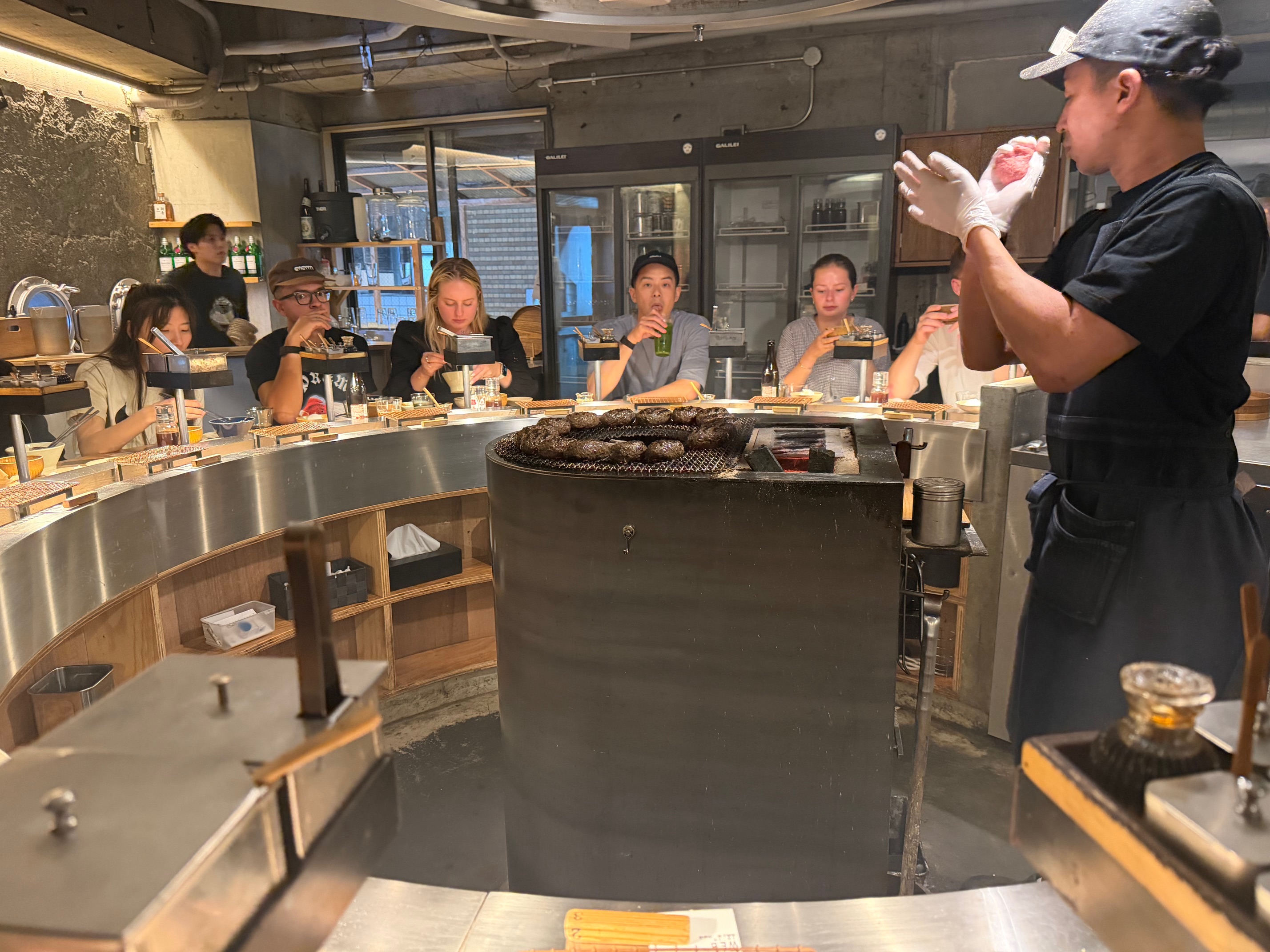
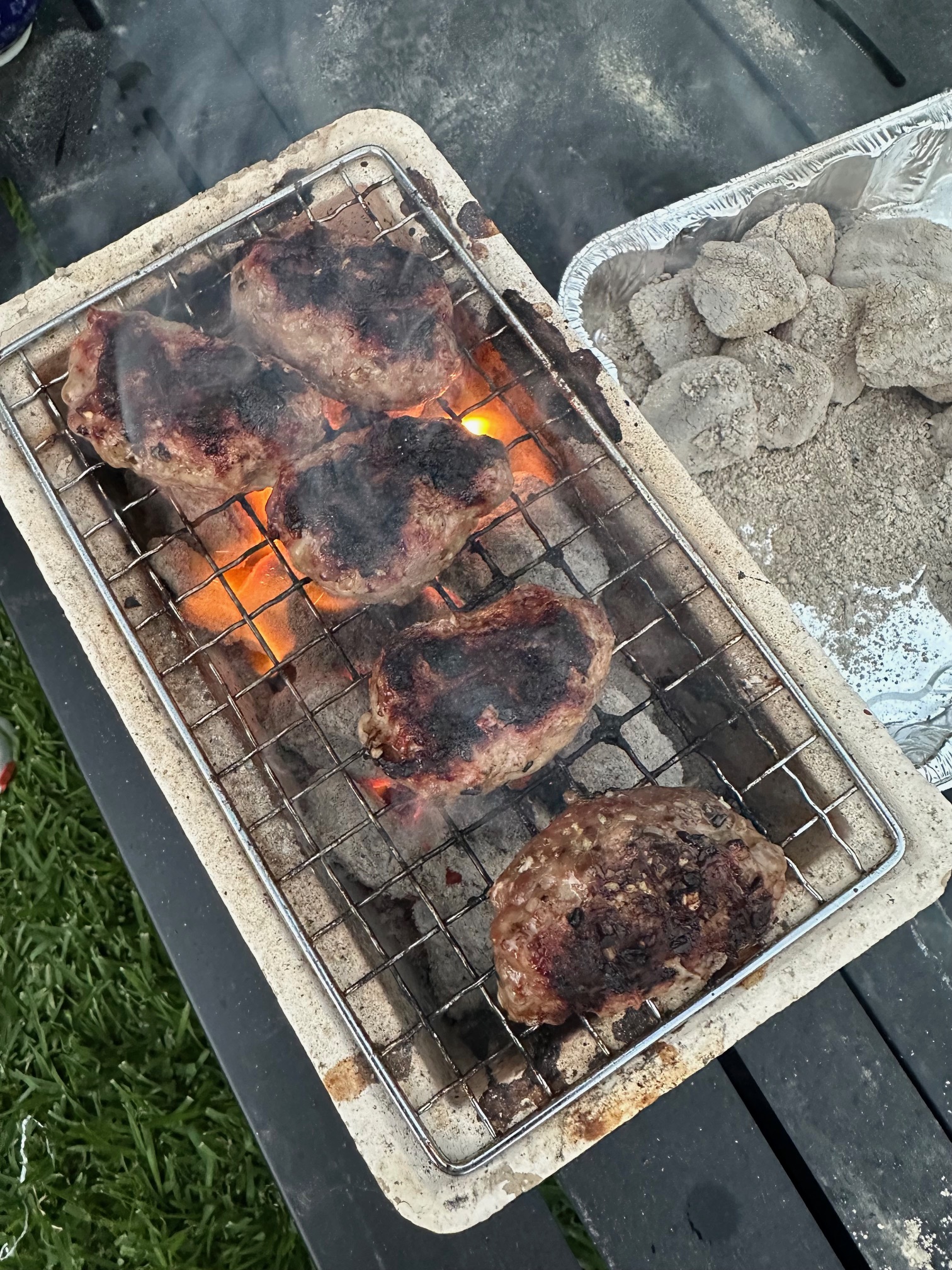
It was here that he learned about the Yakitori grill. It’s a shoebox-sized ceramic grill that conducts heat like the Big Green Egg, but it is so much cuter!
Jude took back so much food from Japan that he couldn't do the Yakitori, but he found one at World Market there, so he cooked me an authentic hambagu dinner.
He also grilled some chicken skewers.
.jpeg)
We had a meal just like the one he experienced,
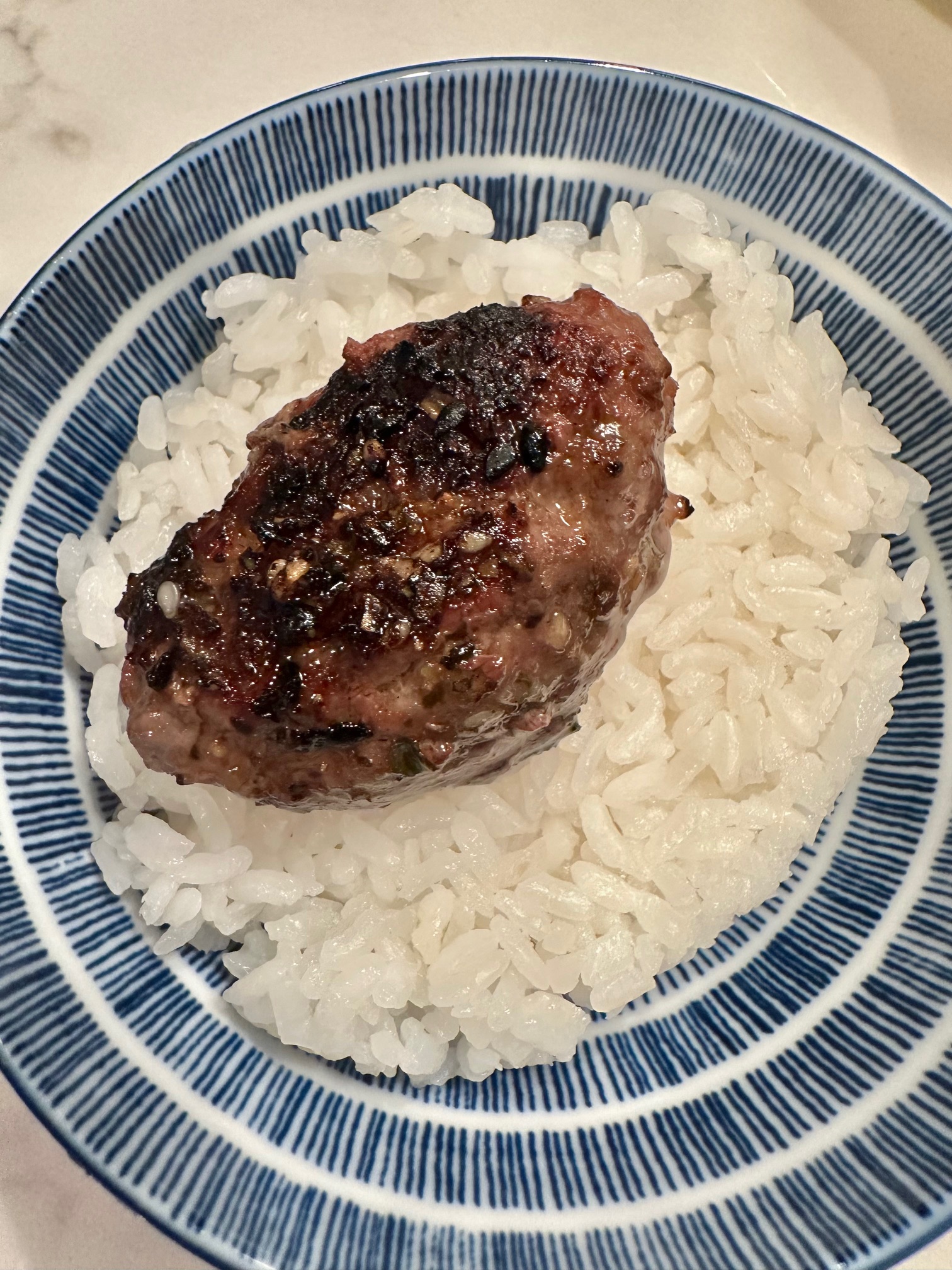
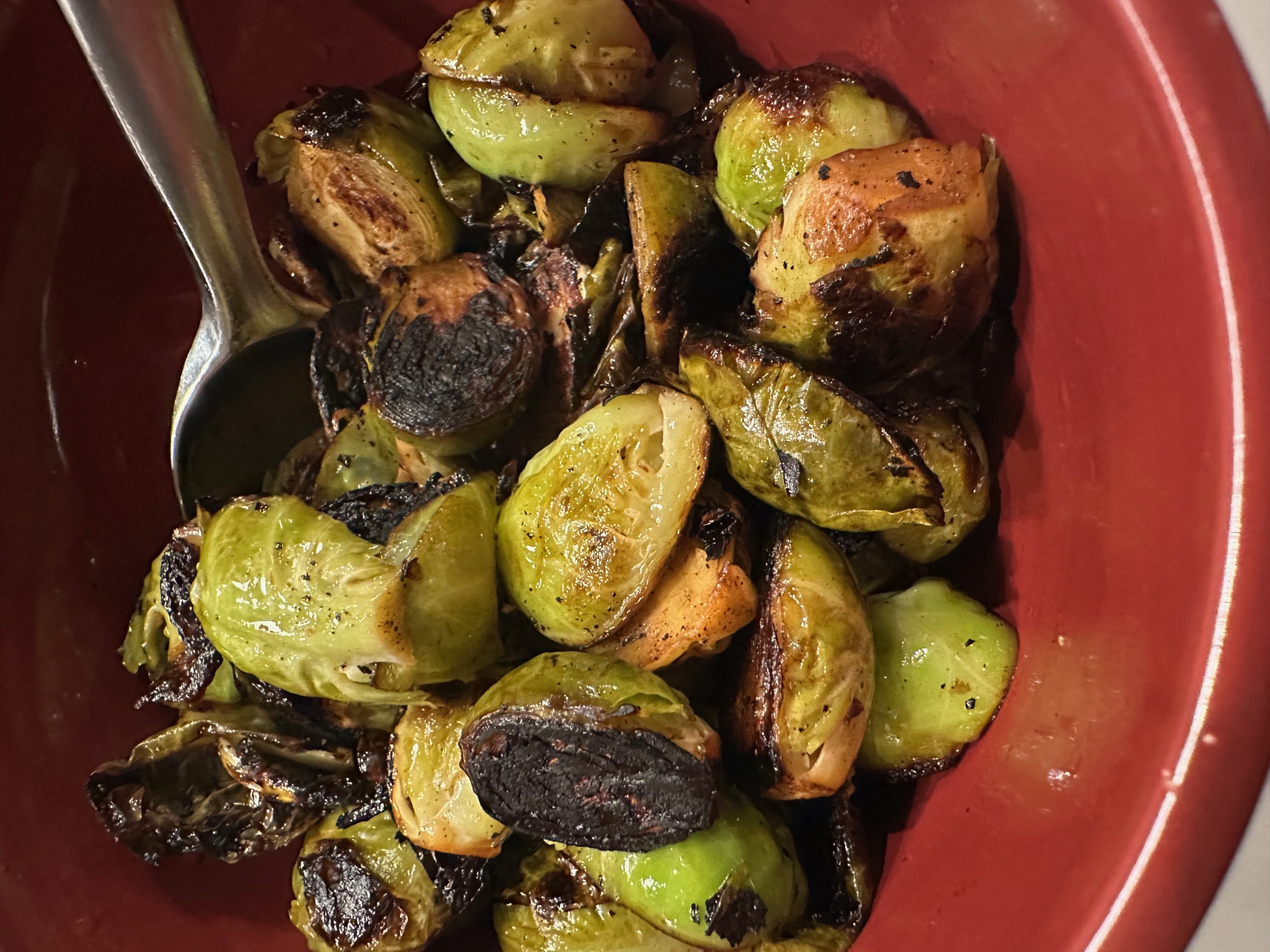
plus a real American trendy dish: Brussels sprouts. His son is quite a chef and baker.
I have to get one of those. It’s perfect for outdoor grilling for one. It uses charcoal just like the big ones, but it could fit in a cabinet.
On the final day of the trip, we went to one of Jude’s current favorites all the way in Long Beach on a roundabout way to the airport. He has been talking about taking me there for months. The place is called Ammatoli, and its menu features food from the Levant. It is a handsome environment with an exotic staff. I had to really study the large menu to see what we would be eating.
There were too many things we were curious about. A Mezze platter was offered for seven items or three. We chose the one for three, and got a few of the dishes that intrigued us.
We ordered Muttabal, Muhammara, and Foul Moudamas, as well as hummus with Chicken Shawarma, and a skewer plate with a chicken skewer and a beef skewer, as well as rice and two sides. We got tabbouleh and spicy hummus. They were accompanied by a rack bearing three large puffy pitas.
The three dips were all interesting. And good. The Muttabal was the prettiest, with its whitish color and dotting of pomegranate seeds. It was fire-roasted eggplant, toom (the white garlic sauce that looks like Crisco), and tahini. I do like eggplant but rarely eat it, and pureed Mediterranean-style is my least favorite way to eat it. I still liked this, though. Its texture was creamy but dense enough to not have that texture problem. For context, let me explain that any hummus without a texture problem must be coarse and grainy like the one at ZEA.
.jpeg)
While I was still deciding between the Muhummara and the Moudama, he ordered the Muhummara. That left me with the third spot, and I got the Foul Moudamas. What intrigued me about this dish was the Fava beans. I love Fava beans with their bright green color. Fava beans are oddly one of the few dishes I have thought about long after eating it.
Years ago, on a St. Joseph’s Day dinner at the now sadly-defunct Avo, I had a wonderful bruschetta with plump, beautiful Fava beans and a generous drizzle of great olive oil with shaved Parmesan cheese on their delicious housemade focaccia bread. I still think about that dish, and that memory moves me to get Fava beans whenever I see them on a menu.
This Foul Mudammas may have cured me of my Fava bean fantasies. I did like the dish, but it was hardly a looker. The beans looked like boring refried beans encircled with olive oil that must have been great, because the dish had a hint of olives. There were bits of tomato and chopped parsley as garnish, making it more pleasing to the eye, but I still liked its flavors.
The roasted red pepper dip had an unusual look and texture as well. The Muhammara wasn’t smooth in texture. It looked like a wet powder. Ground walnuts gave a little crunch in every bite, and the molasses offered a tinge of sweetness. There were ground pomegranates in this too, as well as tahini. A lot going on here. We both thought this was the best of the three. The puffy pita was as good as anything I’ve had anywhere, including the pita that caused the Shaya pita frenzy when it opened twelve years ago.
.jpeg)
I was underwhelmed by the ultra-smooth and creamy texture of the hummus, so it was good that the grilled chicken shawarma was there as a counterbalance.
.jpeg)
For some reason, I had to have something called Jenge Cigars. Just the name made me curious, but in hindsight, $20 was a high price for curiosity. These “cigars” were $4 apiece. But if you say the words cheese and Phyllo to me, I’m in. The cheese was disproportionately uneven for the paper-thin dough. I didn’t even finish these.
.jpeg)
For entrees, we shared one platter of skewers. We had one chicken and one beef skewer served over rice pilaf. The original Rice-A-Roni was modeled after this rice and vermicelli mix that originated in the Levant. I love this stuff anywhere I get it.
Two sides came with this, and we got Tabbouleh, the parsley and herb salad, and the spicy hummus.
.jpeg)
I loved this grilled chicken, but was less enthusiastic about the beef. The hummus had the same texture issues for me as the basic hummus.
Tabbouleh is something I don’t usually get, but this had a much smaller-than-usual bulgur wheat element, and I liked it much better. It was just a light vinaigrette of good olive oil and strong lemon juice, with herbs like mint but mostly parsley.
The chef here is Palestinian and Syrian, so maybe they don’t use so much grain in their Tabbouleh.
This Levantine feast was $149 with tip. We went a little crazy and ordered foolishly. It is pricey, but we could have been smarter in ordering. We'll do better next time, because we have to go back and see what some of these things are.